
The New Bottleneck: Can Leadership Quality Keep Pace With Vietnam’s Growth Ambitions?
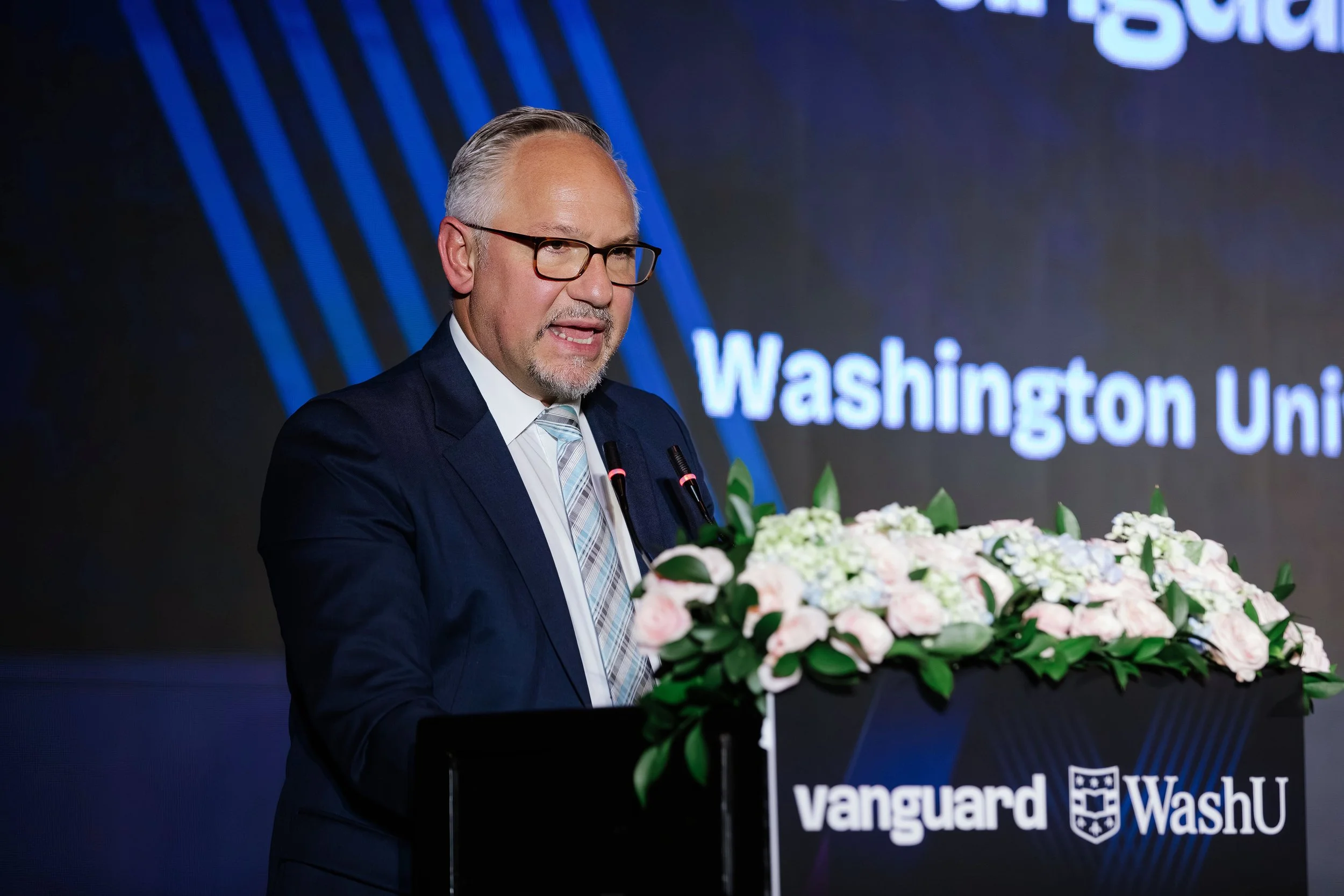
Photo: Prof. Markus Baer, Vice Dean of Executive Education at Washington University in St. Louis, speaking at Vanguard Connect Forum on Mastering the Second Curve
— August 2025, Ho Chi Minh City
Vanguard Executive Interview Series, November 27th, 2025
—by Vietnam Vanguard
Vietnam is racing toward the future — but many of its companies are still running on operating systems built for an earlier era. Revenues are rising, foreign capital is accelerating, and entire industries are stepping into new value tiers. But step inside the organizations powering this momentum, and a different picture emerges: decision rights concentrated at the top, weak leadership benches, fragmented processes, and talent systems that haven’t caught up to the speed of the market.
It’s an uncomfortable truth: Vietnam aims for Singapore-level sophistication, but many companies still operate with 1990s-style corporate structures.
This is not a moral failing. It’s a structural one — and it’s shaping how far Vietnamese businesses can actually go in the next decade.
For nearly twenty years, Professor Markus Baer has heard the same storyline echo across emerging markets: companies thrilled about soaring revenues, a market “taking off,” and an economy at the cusp of breakout growth.
India heard it. China lived through it. Mexico, the UAE, Indonesia — all experienced a similar early-boom optimism.
And every time, Baer observed the same structural flaw: growth almost always accelerates faster than leadership capability.
Vietnam, he argues, has now entered that phase — and the imbalance is widening quickly.
“Vietnam is right in the middle of that structural mismatch,” Baer says. “The economy is only just accelerating, but the organizational pressure already resembles mid-stage growth in much larger economies.”
The cause isn’t a single shock. It’s the convergence of multiple forces at once: global supply-chain realignment, rapid technological shifts, and a national push toward higher-value economic activity. These pressures are stacking, not staggering. And the question facing Vietnam’s business community is brutally simple:
Can Vietnamese companies grow faster than the people inside them can manage?
And if that capability gap becomes permanent — what breaks first?
The Capability Gap Begins Within the Organization
In Baer’s view, the leadership challenge in Vietnam is not about talent scarcity — it’s about talent design.
Vietnamese companies, much like their peers in other fast-growth economies, tend to promote high-performing specialists into management. But technical excellence and leadership capability are not adjacent; often, they are unrelated.
“A brilliant violinist doesn’t automatically become a conductor,” Baer says. “They can play beautifully, but leading fifty musicians with different temperaments, speeds, and egos — that is an entirely different profession.”
Inside Vietnamese companies, that mismatch creates predictable friction:
Senior leaders doing middle-managers’ work
Departments operating with different “management languages”
Technology purchased but not truly used
Decision-making concentrated at the very top
As companies scale, these cracks turn into fractures unless leadership development becomes systematic, not incidental.
Vietnam’s Most Significant Bottleneck Is Still at the Top
Most Vietnamese companies are still young. Many have never gone through real generational transition. Their organizational identities remain tightly tied to their founders.
“When the personality of a company is inseparable from its founder, professionalizing the leadership system is extraordinarily difficult,” Baer notes.
The result is a familiar scenario inside fast-growth Vietnamese businesses:
One company, two power centers.
Employees continue looking to the founder for final decisions, while newly appointed leaders — even highly competent ones — lack the authority or space to act. Culture splits in half: one side anchored in legacy habits, the other trying to implement new systems.
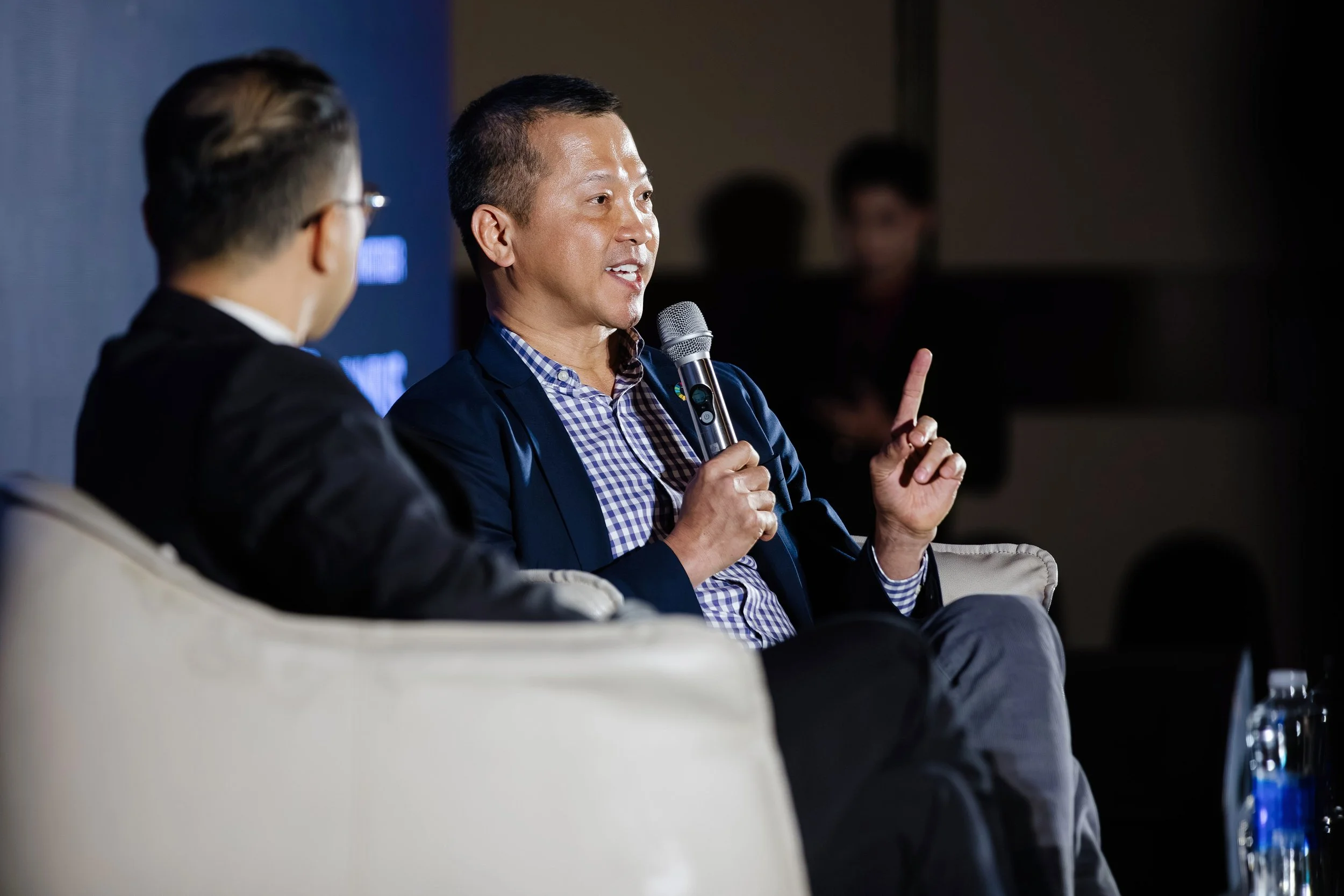
Mai Hữu Tín, Chairman of U&I Group and one of Vietnam’s most seasoned business leaders, warned about this dynamic at a recent Vanguard forum. Many companies, he argued, are trying to import “bought or borrowed talent” to solve structural problems — but talent without authority and alignment only amplifies the tension.
“You can buy experts,” Tín said, “but you cannot buy organizational maturity.”
Without clear succession architecture and without founders creating real leadership space, no amount of external talent can compensate.
And Baer agrees: an organization caught between old and new power structures becomes trapped. Leadership cannot grow. Responsibility cannot cascade. The company slows under its own weight.
“You can buy experts, but you cannot buy organizational maturity.”
— Mai Hữu Tín, Chairman of U&I Group
Technology Isn’t a Shortcut — It’s an X-Ray
Digital transformation — and especially the accelerating adoption of AI — is now exposing weaknesses that were previously easy to hide.
Vietnamese companies are quick to purchase technology: Copilot licenses, AI solutions, dashboards, automation workflows. But once deployed, problems surface immediately:
Fragmented processes
No data ownership
Managers experimenting rather than integrating
Staff reverting to Excel because it feels safer
“The problem isn’t the technology,” Baer says. “It’s the absence of people with the organizational skill and positional clarity to use it.”
AI, in his view, doesn’t patch capability gaps.
It makes them visible faster.
Mai Hữu Tín offered a similar caution: companies embracing digital transformation often underestimate “the human operating system.” Without governance, structure, and disciplined decision-making, he warned, “technology becomes an expensive decoration.”
The Hard Question: How Long Until Leadership Development Shows Results?
Vietnamese executives frequently ask Baer whether leadership development can produce quick wins. “Can we pilot for a quarter?”, “Will performance improve next quarter?”
He answers with a metaphor: “No one evaluates a child after three months in school. You evaluate after twenty years.”
When done correctly, leadership capability delivers exponential returns:
2–3x productivity improvement
Dramatically lower turnover
The ability to scale without organizational collapse
But these gains require patience — the one ingredient most fast-growing companies lack. Many prefer to “buy solutions” — consultants, software, talent — rather than build leadership foundations.
Yet organizational durability comes from things that cannot be bought:
Cultural coherence
Decision-making discipline
Clear delegation
Cross-functional coordination
Succession readiness
These are hard to quantify in a quarter — but they are the determinants of long-term survival.


Lessons From Singapore and the UAE
Countries that successfully bridged the capability gap didn’t wait for leadership shortages to emerge — they prepared decades in advance.
Singapore built civil-service academies, mandatory rotation schemes, and multi-decade talent pipelines long before it needed them.
The UAE began its digital transition by investing not in technology first, but in people: scholarships, expert-led training, and capability-building institutions.
The common thread: Leadership is grown, not hired.
Vietnam has the raw ingredients — demographics, capital, geopolitical tailwinds — but not the same runway. The world is moving faster, supply chains are shifting faster, and technology cycles are compressing.
Delay carries a cost.
Strong Hardware, Weak Operating System
Baer describes Vietnam as a device with powerful hardware — young workforce, strategic location, capital inflows — running on an incomplete operating system.
The missing components include:
A unified managerial language
Scalable decision frameworks
Effective technology integration
A culture that moves beyond founder-shadow governance
Organizational resilience to global shocks
An operating system cannot be copied or downloaded. It must be architected — deliberately, coherently, and layer by layer.
That requires long-term commitment from the top, not quarterly enthusiasm.
The Trillion-Dollar Question
Vietnam stands to gain enormously from global supply-chain diversification and rising capital inflows. If current momentum holds, Vietnam could surpass USD $1 trillion in GDP by the late 2030s.
But only if leadership capability keeps pace. Who will lead the companies that anchor a trillion-dollar economy? Who will manage complexity at regional scale? Who will steward institutions strong enough to support high-value growth?
Vietnam’s trajectory is not limited by ambition, capital, or market opportunity — it is limited by capability.
“Vietnam can absolutely become a new economic and political center of Southeast Asia,” Baer says. “But only if you truly invest in the people who will carry that future.”
—Vietnam Vanguard
November 27th, 2025