
The Leadership Gap Behind Vietnam’s Transformation
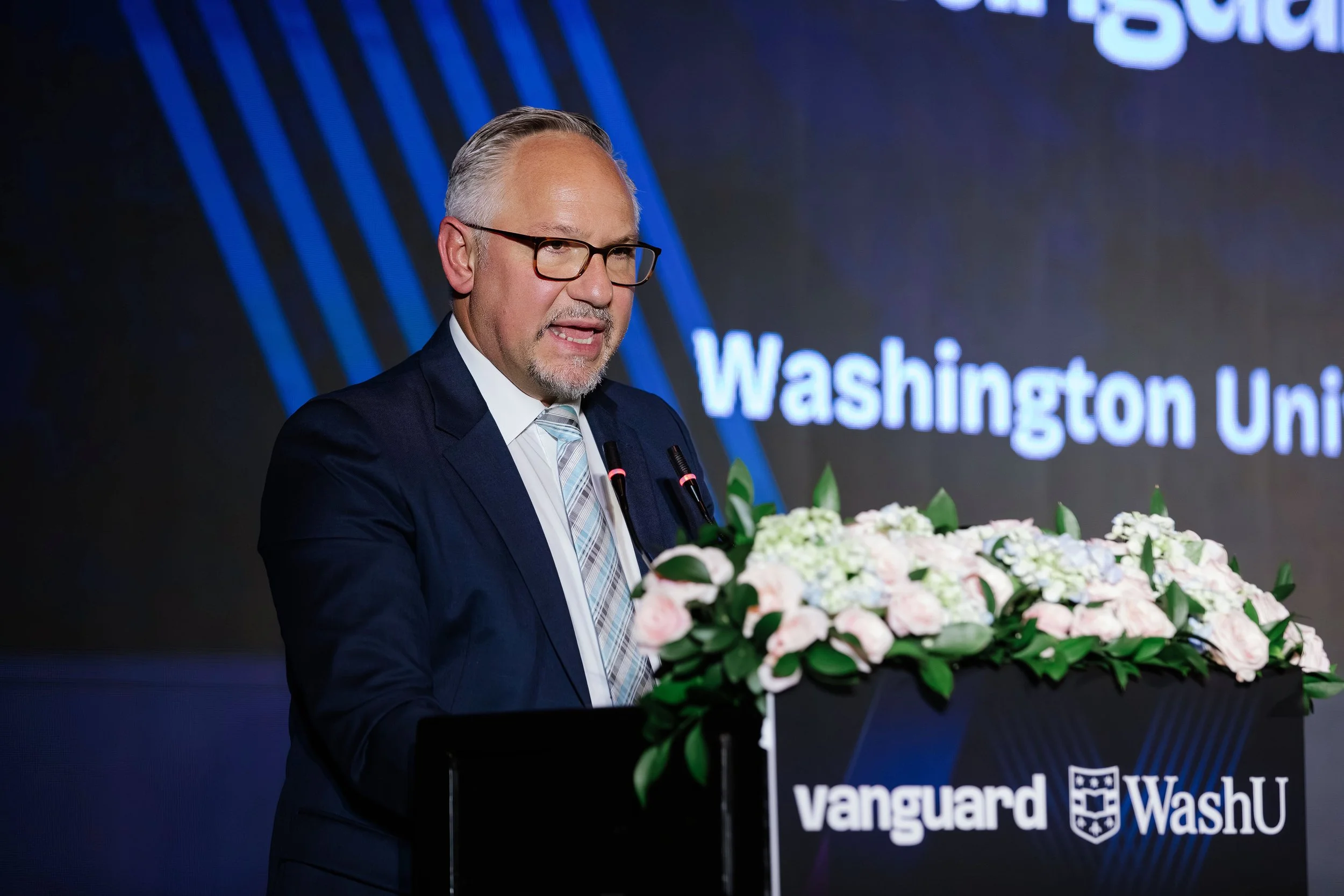
Photo: Prof. Markus Baer, Vice Dean of Executive Education at Washington University in St. Louis, speaking at Vanguard Connect Forum on Mastering the Second Curve
— August 2025, Ho Chi Minh City
Vanguard Executive Interview Series, November 25th, 2025
—by Nam Nguyen

Vietnam’s economic trajectory is no longer in question. The country has entered a new phase of acceleration, driven by supply-chain realignment, rising capital inflows, and an increasingly explicit national ambition to move up the value chain. Discussions of a trillion-dollar economy in the coming decades are no longer speculative; they are embedded in policy and corporate strategy alike.
Yet beneath the surface of this expansion lies a quieter constraint. Many Vietnamese firms are scaling revenue and complexity faster than they are building leadership architecture. In earlier cycles of growth, this imbalance could remain hidden for years. In the age of artificial intelligence and compressed technology cycles, it becomes visible much sooner.
Professor Markus Baer of Washington University in St. Louis has studied this pattern across multiple high-growth economies. In India, China, Mexico and the Gulf states, he observed a consistent dynamic: early-stage expansion tends to outpace the institutional development required to sustain it. Companies grow rapidly in revenue and footprint, but internal managerial systems remain under-designed.
“Vietnam is now in that phase,” Baer argues. The economy is accelerating into a more complex stage of integration with global capital and technology networks, yet many organizations still operate with decision structures optimized for founder-led growth rather than institutional scale.
The issue is not a shortage of intelligent or capable individuals. Vietnam’s talent base is increasingly sophisticated. The structural challenge lies in how leadership is developed and distributed. In many fast-growing companies, strong technical performers are elevated into managerial roles without systematic preparation for the transition. Functional excellence becomes the proxy for leadership readiness. The result is predictable: operational strength at the top, fragility in the middle.
As companies expand, senior leaders are pulled back into day-to-day execution because authority has not been fully cascaded. Departments operate with inconsistent decision frameworks. Technology is adopted enthusiastically but layered onto processes that were never redesigned. Growth continues, but coordination costs rise.
This strain becomes more pronounced in first-generation enterprises, where organizational identity remains closely tied to founder personality. Professionalization, in such contexts, is not merely a matter of recruitment. It requires a deliberate shift in power architecture. Without it, companies often drift into a dual structure: formal hierarchies coexist with informal founder channels. Managers are appointed, but decisions still flow upward.
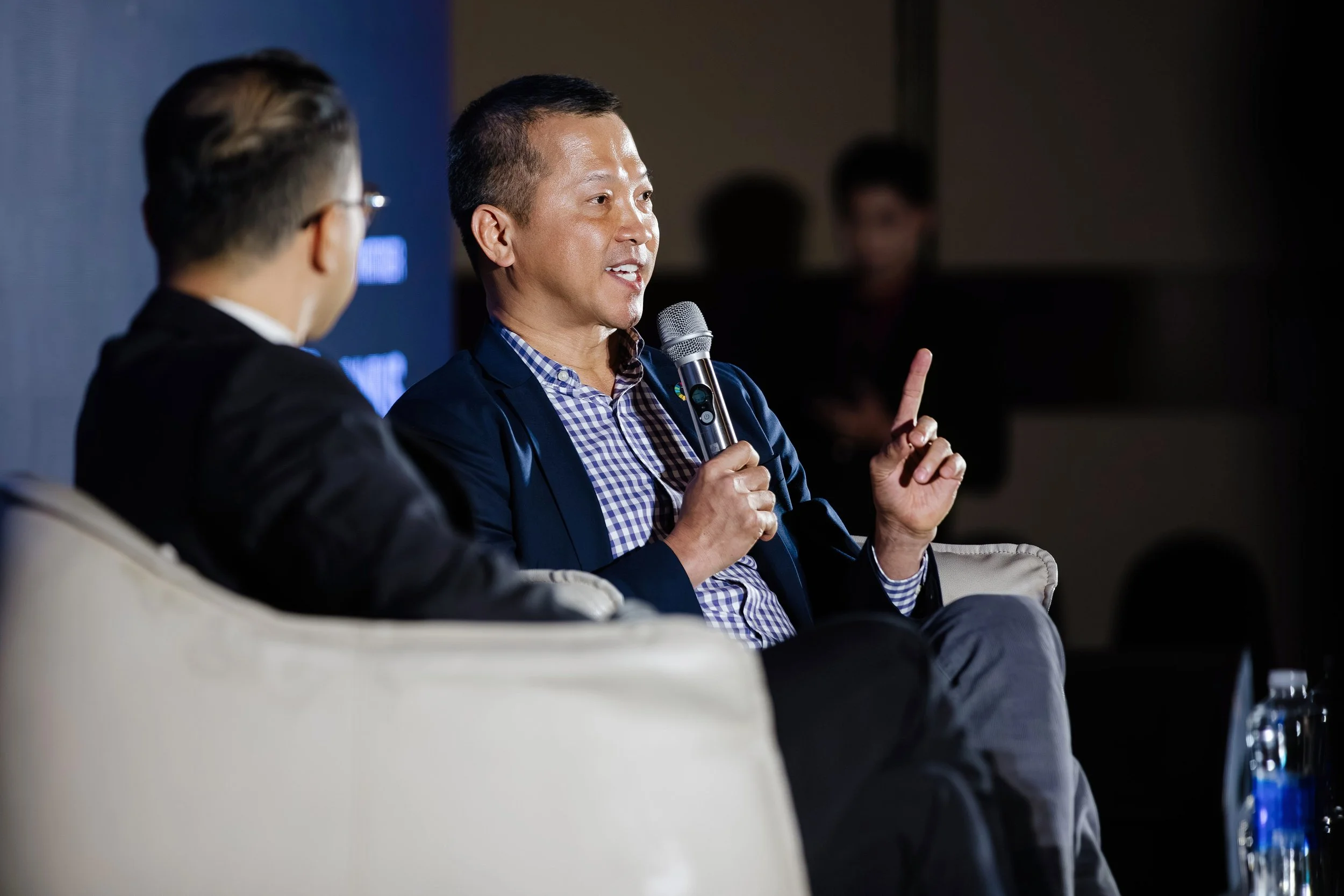
At a recent forum, Mai Hữu Tín, Chairman of U&I Group, cautioned that importing external expertise cannot substitute for internal maturity. “You can buy experts,” he noted, “but you cannot buy organizational maturity.” Without clarity of authority and cultural alignment, high-profile hires frequently encounter invisible ceilings.
Artificial intelligence now acts as an accelerant in this environment. Vietnamese companies have shown themselves to be swift adopters of new tools, from automation platforms to AI copilots. Yet technology does not resolve structural ambiguity. It magnifies it.
“The problem is rarely the software,” Baer observes. “It is whether the organization has the positional clarity and governance discipline to integrate it.” AI compresses feedback loops. Where decision rights are unclear, confusion surfaces faster. Where data ownership is fragmented, inefficiency becomes visible immediately. In this sense, AI is less a shortcut to competitiveness than a stress test of institutional coherence.
The pressure is intensified by Vietnam’s broader reform agenda. As regulatory frameworks evolve and capital becomes more discerning, expectations around governance and managerial depth are rising. Domestic firms are no longer competing solely on cost arbitrage; they are entering arenas that demand cross-border coordination, risk management and strategic discipline. These capabilities cannot be improvised at scale.
You can buy experts, but you cannot buy organizational maturity.
— Mai Hữu Tín, Chairman of U&I Group
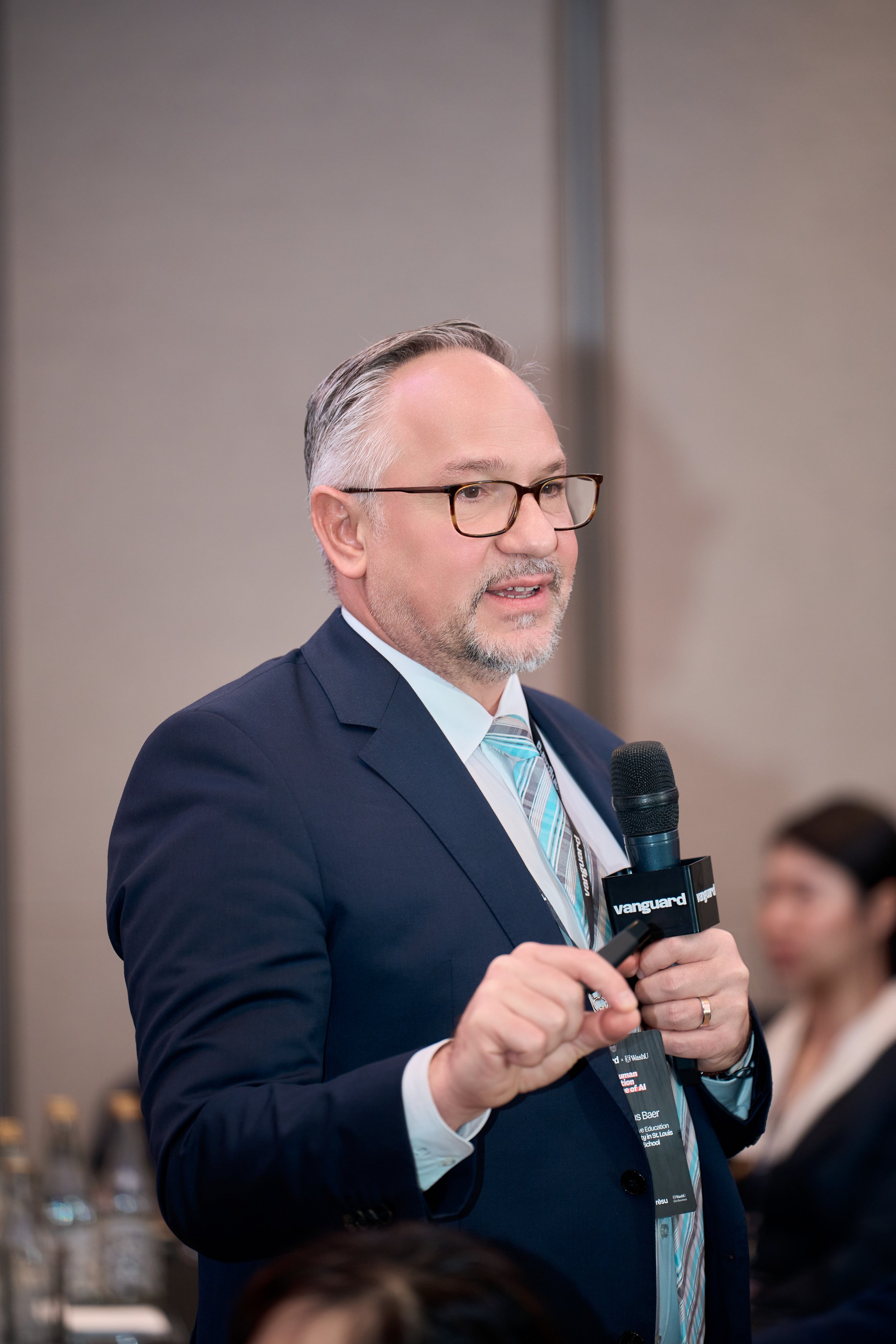
Vietnam can absolutely become a new economic and political center of Southeast Asia, but only if it invests deliberately in the people and systems that will carry that scale.
— Prof. Markus Baer, Vice Dean of Executive Education, Washington University in St. Louis, Olin Business School
Comparative examples offer perspective. Singapore invested decades in leadership pipelines across both public and private sectors before reaching its current level of institutional sophistication. United Arab Emirates paired digital ambition with sustained investment in human capital development. In both cases, leadership infrastructure was treated as national capacity, not merely corporate overhead.
Vietnam’s structural advantages are evident: favorable demographics, strategic geography, expanding industrial capacity and growing capital markets. But the window for institutional catch-up is narrower than in previous development cycles. Technology cycles are shorter. Competitive landscapes shift faster. Organizational weakness that might once have been absorbed gradually now becomes immediately consequential.
Baer describes the country as possessing strong hardware but an operating system still under construction. The missing components are not abstract. They include unified managerial language, scalable decision frameworks, genuine delegation beyond founder shadow, disciplined technology integration and credible succession planning. These are not cosmetic upgrades; they are the architecture that allows growth to endure.
Vietnam’s ambition is not in doubt. The more difficult question is whether leadership capability will scale in parallel with economic opportunity. Crossing the trillion-dollar threshold will require more than capital and favorable geopolitics. It will require institutions capable of absorbing complexity without reverting to centralization.
“Vietnam can absolutely become a new economic and political center of Southeast Asia,” Baer says. “But only if it invests deliberately in the people and systems that will carry that scale.”
In an era defined by artificial intelligence and compressed change, speed alone is not decisive. Depth of leadership — distributed, disciplined and institutionalized — may prove the country’s real differentiator.
Nam Nguyen
—Vietnam Vanguard