

Vietnam's Synthesis Problem
Insights from Vietnam 1T SUMMIT — Jan 7th, 2026
— Vietnam Vanguard
Executives across Vietnam's technology and financial sectors keep independently naming the same gap in the country's talent. The real data complicates their story more than it confirms it — and it isn't obvious whether the fix is educational, economic, or something one Vietnamese company has already built into its operating model.
Ask people who actually run companies in Vietnam what limits the country's workforce, and a strange thing happens: people in completely unrelated industries converge on the same specific complaint, in nearly the same language, without having compared notes. Le Quang Dam, CEO of Marvell Technology Vietnam, describes it from inside a chip-design floor. Dr. Tuan Phan, an MIT- and Harvard-trained professor who now runs HKU's Vietnam Center, describes it from inside a classroom. Veo Nguyen, Chief People Officer at Techcom Bank, describes it from inside a hiring pipeline. None of them work in the same sector. All three land on the same shape.
Strong Execution, Thin Synthesis
Dam's version, from semiconductors: "Vietnamese engineers have good technical knowledge and expertise, but we still lag in soft skills — communication in English, teamwork, presentation skills, and how we work across teams." Not a talent shortage. A specific, narrower gap sitting one layer above raw technical competence.
Phan's version, from education, names the mechanism more bluntly: "In Asia, we might do very well in math, but then sometimes we lack in communication skills... we tend to be very Confucian in the way we learn, that we are very obedient. The teacher says something and we just follow exactly. In Vietnamese, it's trả bài — you regurgitate and give back. But we're not really synthesizing, creating and generating new synapses."
Nguyen's version, from banking, is the same complaint translated into HR language: "Vietnamese education is quite STEM-heavy... tilted to more of the overly engineer side, very technical, using too much of one side of the brain." What she says talent needs to add is the ability to "see things in holistic picture... think about innovation, think about structure problem solving."
Three sectors, one diagnosis, delivered without coordination: the technical floor is solid. The synthesis layer above it is thin. That kind of unprompted convergence across unrelated industries is usually a sign something structural is actually going on — worth taking more seriously than a single executive's complaint about hiring.
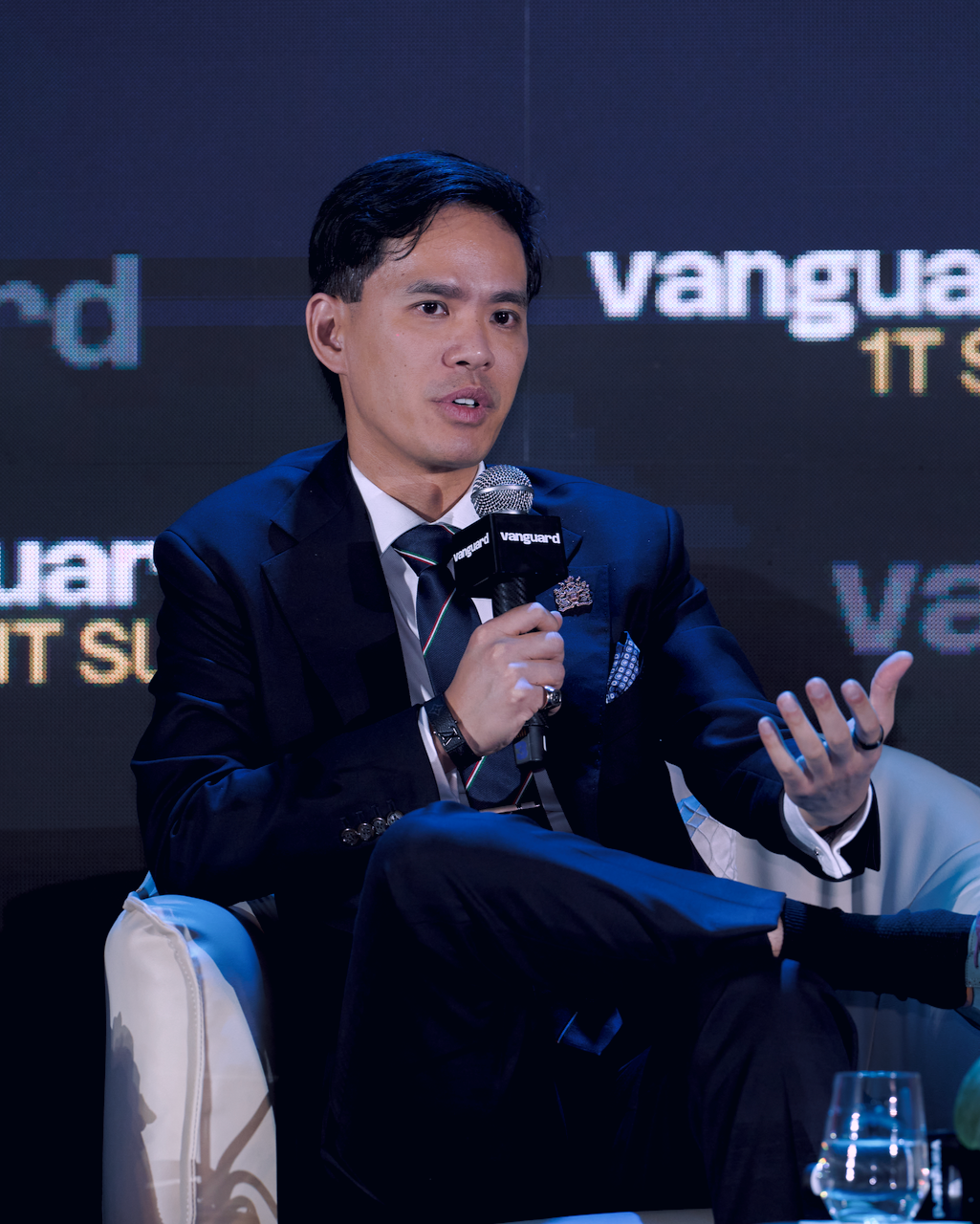
Dr. Tuan Phan, Associate Professor in Marketing and Innovation & Information Management, Director of the Representative Office of HKU in Vietnam — University of Hong Kong
What the Numbers Actually Say — and the Two Ways to Read Them
Phan's framing — "the education center of the world is moving eastward," Vietnam doing "very well in math" — is the flattering version of this story, and the most recent data doesn't fully support it. Vietnam's PISA 2022 results were the country's weakest since it joined the assessment in 2012: 469 in math and 472 in science, both slightly below the OECD average, down 27 and 71 points respectively from 2018. Vietnam ranked 31st of 81 countries in math, 35th in science. That is not a top-tier result, and there are two genuinely different ways to read it.
The generous reading is the one the executives were gesturing at: adjusted for socioeconomic level, Vietnamese students rank among the best performers in the world in math — fourth globally on the OECD's own socioeconomic-adjusted comparison, well above what the country's education spending would predict. On this reading, the floor is real and high, and what's thin is specifically the top: only 5% of Vietnamese students reached the elite Level 5–6 tier in math, against an OECD average of 9% and Singapore's 41%. The system produces broad, above-expectation competence and a narrow band of advanced, synthesis-capable performers — a structural ceiling problem, not a general quality problem.
The less generous reading is that a 27-to-71-point decline across every subject, in a single testing cycle, is what a broad quality erosion looks like — not a story that neatly localizes itself at the top of the distribution while the rest of the system holds steady. On this reading, "floor high, ceiling thin" is the more comfortable story to tell, and the harder one — that the whole system may be under real strain, not just underdeveloped at the elite tier — deserves equal standing until there's a stronger reason to prefer one interpretation over the other. Both readings use the same numbers. Neither is disprovable with what's public so far.
Is This a Talent Problem, or a Demand Problem Wearing a Talent Problem's Clothes?
There's a second tension worth sitting with, and it's one none of the three executives raised directly, because it cuts slightly against each of their framings. Vietnam's growth model for the past two decades has run substantially through assembly, testing and packaging, contract manufacturing, and business-process outsourcing — work that rewards precision, reliability, and following a specification exactly, and does not, in most roles, require or reward synthesis at all. Dr. Tue Anh Nguyen, framing the semiconductor industry on a separate panel at the same summit, put a name on Vietnam's position in that value chain directly: anchored at the downstream end, where "design, IP and advanced manufacturing equipment... capture a disproportionate value" upstream, and Vietnam mostly doesn't sit there yet.
If that's an accurate description of where most jobs in the Vietnamese economy actually sit, then a thin layer of synthesis-capable talent isn't obviously an educational failure to fix — it may be a rational equilibrium. An economy that has spent two decades rewarding execution will produce workers who are excellent at execution. Synthesis is expensive to train and, until recently, has had comparatively few roles in the domestic economy that actually required or compensated it well. Under this reading, the sequencing matters: training more synthesis-capable graduates without first (or simultaneously) growing the number of roles that need and reward that skill risks producing exactly the outcome Dam is separately trying to reverse — talented, broadly-capable Vietnamese professionals leaving for markets that already have that demand, rather than staying to build it domestically.
This doesn't cancel Phan's or Nguyen's diagnosis. It complicates who's actually responsible for closing the gap. If it's primarily a supply problem, the fix runs through curricula, universities, and how students are taught to think. If it's primarily a demand problem, the fix runs through industrial policy and what kind of investment and value-chain positioning Vietnam pursues next — closer to Marvell's own IC-design strategy than to any classroom reform. Most likely it's both, reinforcing each other in a loop that's genuinely hard to break from either end alone.
One Company That May, or May Not, Be a Template
Le Thi Doan Trinh, Chief People Officer of S-Commerce — the group behind Giao Hang Nhanh and AhaMove — describes a company that spent thirteen years deliberately building its way out of exactly this trap, on the demand side rather than the supply side. Logistics, she said, "used to design the job very, very much related to following the orders or low-value skill or operational aspect only." The fix wasn't a training program; it was restructuring frontline work itself so it required synthesis by design. Shippers get direct access to the same operational data management uses and real latitude to optimize their own routes and decisions. Promotions, vehicle purchases, and new site locations all run through the same data-driven habit, cascaded from leadership down to the delivery workforce rather than imposed as a separate initiative layered on top.
That's a real existence proof that the gap is not fixed or cultural — S-Commerce built genuine synthesis-demanding work inside a famously low-margin, execution-heavy industry, while competing directly against Grab, J&T, and other well-funded regional rivals. But it's worth being honest about what kind of proof it is. Thirteen years of deliberate redesign, led by a founding team that had already worked inside global tech companies before entering logistics, is not obviously a playbook that transfers easily to a garment factory or a call center with thinner margins and less sophisticated leadership. S-Commerce may be evidence that the fix is replicable. It may equally be evidence of how unusual the conditions for building it actually are — which would mean the more common outcome, across the wider economy, looks less like S-Commerce and more like the thin-ceiling numbers the PISA data describes.
HKU's answer sits closer to the supply side. The university is launching a Master of Business in AI for Business degree explicitly built to force technical and non-technical thinking into the same course of study — GPUs and programming taught alongside organizational psychology. It's one program, unproven at scale, and it will take years before anyone can say whether graduates of it actually close the gap Phan describes or simply relocate it one degree later.
Vietnam does not currently have to choose between these theories, because nothing forces the choice yet — the economy is still young enough, and the value chain repositioning still early enough, that education reform, industrial policy, and firm-level management redesign can all run in parallel without competing for the same scarce resource. What it will eventually have to reckon with is which of these levers is actually moving the ceiling, because the answer changes who gets the credit, who gets the funding, and who gets asked to change first.
Insights from 1T SUMMIT — Jan 7th, 2026
— Vietnam Vanguard