
Vietnam's New Face of Capital
How a generation of conglomerate builders is rewriting the country's corporate playbook
Vanguard Editorial Board
3rd March 2026

The first generation of Vietnamese private enterprise grew up alongside the domestic market boom that followed Đổi Mới. Land and assets were repriced under market mechanisms; urbanisation, mass consumption and a rapidly expanding banking system did the rest. The defining industries of that era, real estate, retail, tourism, finance, were ones tightly bound to the domestic growth cycle and the inflation of local asset values.
A second wave is now forming along different lines. It is moving into foundational industry: industrial zones, power infrastructure, utilities. These were once the exclusive preserve of state-owned enterprises. The ambition is not simply to sell into a mass market, but to accumulate and control long-duration assets, ones that generate stable, recurring cash flows underwritten by sophisticated capital structures. The logic is closer to infrastructure capital than consumer enterprise.
Within this landscape, GELEX Group has emerged as a compelling contestant. It was not built as a startup story. It’s a sequence of acquisitions, reconstructions and strategic repositioning, with the declared objective of becoming one of Vietnam's premier investment conglomerates within the medium term.
That ambition is future-facing. As of late 2025, GELEX is already a company of considerable scale. It ranked 217th on Fortune's list of the 500 largest companies in Southeast Asia. Consolidated revenue reached approximately VND 39,500 billion, up more than 17% year-on-year. Pre-tax profit hit a record of around VND 4,600 billion, a near-30% increase. Total assets stood at roughly VND 73,500 billion. The electrical equipment division accounts for close to 63% of revenue; the infrastructure and industrial zone segment contributes the long-cycle earnings and structural growth runway.
GELEX reached this scale by growing revenue and assets nearly sixfold in roughly a decade. Revenue and profit rose steadily; the balance sheet expanded rapidly; the business mix shifted from pure manufacturing toward long-duration infrastructure. That shift, and the size of assets it involved, demanded financial leverage and dependence on credit cycles. Accordingly, GELEX spent 2024 and 2025 restructuring actively: listing subsidiaries, recalibrating its capital structure, and formalizing relationships with financial partners.
These moves represent a transition from asset accumulator to active capital manager — buying and rotating assets in cycle, in keeping with its stated ambition of becoming an investment holding group.
This trajectory is not a tactical improvisation. It is the product of a sequence of deliberate strategic decisions, reflecting both a coherent development logic and the DNA of a leadership team that has been in place since the early stages of the growth cycle.
Before that decade of expansion, the group looked entirely different.
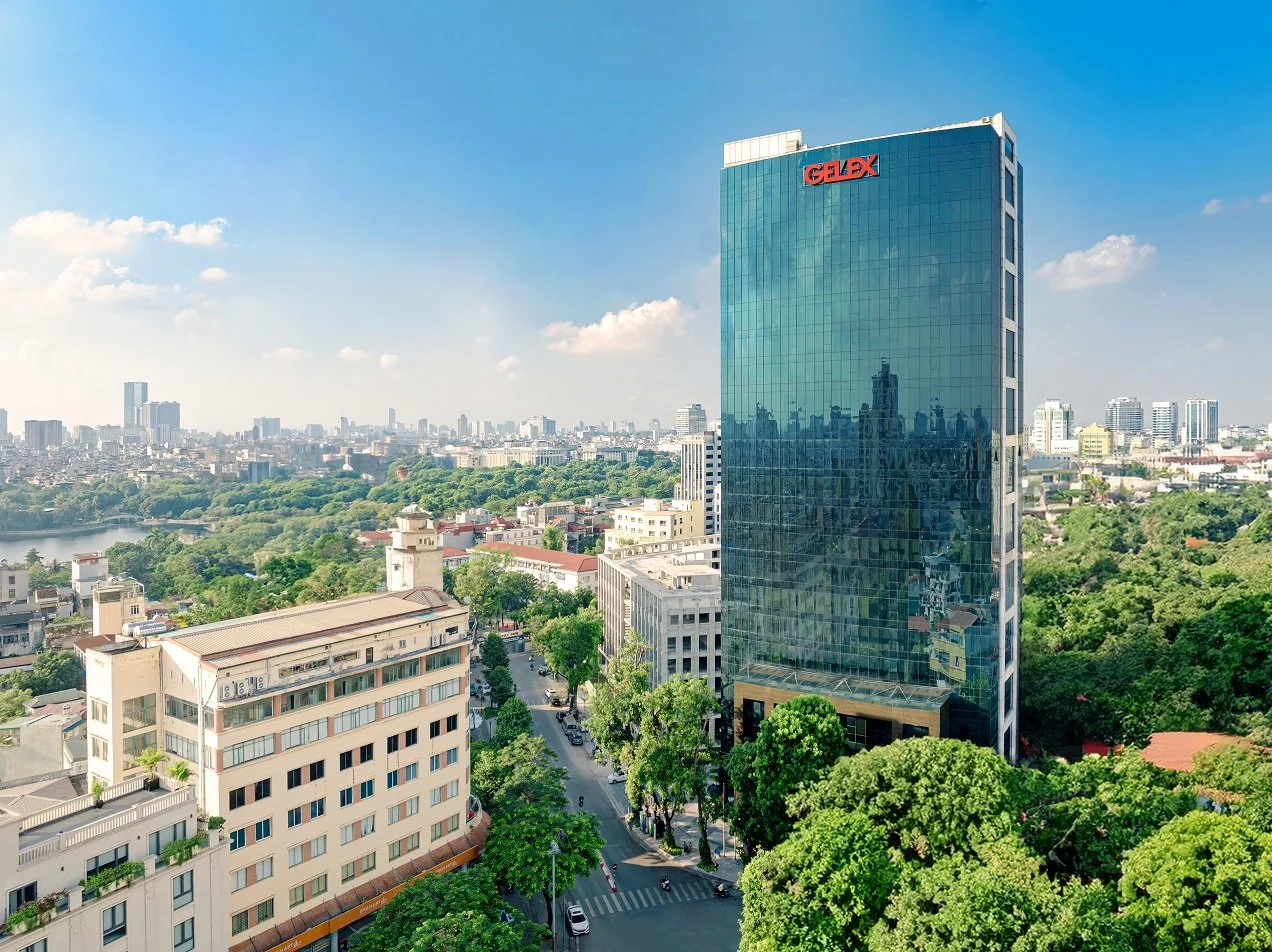

GELEX ranked #217 in Fortune Southeast Asia 500
The Quiet Acquisition
GELEX was founded in 1990 as Vietnam Electrical Equipment Corporation, under the Ministry of Industry (later the Ministry of Industry and Trade). Its mandate was straightforward and unglamorous: to consolidate a dispersed collection of state-owned electrical equipment factories, CADIVI, THIBIDI, HEM and others, under a single administrative umbrella.
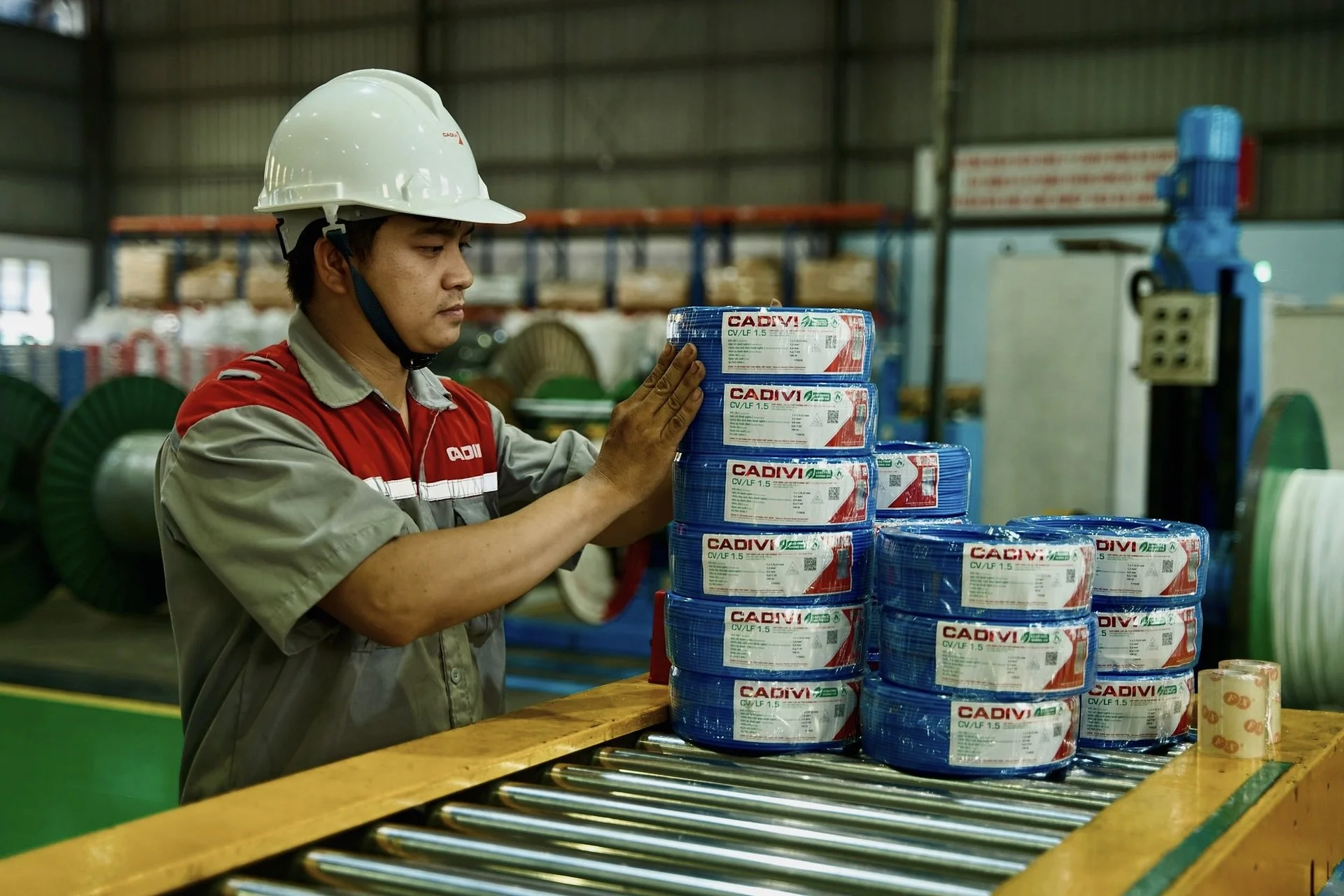
Revenue was stable. Market share in power cables, transformers and electrical components was solid. Brands like Cadivi and Thibidi were well known in the construction and installation trades.
GELEX was steady, with clear assets, but thin margins, slow growth, and virtually no strategic momentum. A rough diamond, but a difficult one to cut.
In late 2015, the Ministry of Industry and Trade divested nearly 79% of its stake in GELEX through a transaction that was swift and unexpectedly smooth, setting records, at the time, for both speed and value in the history of Vietnamese state divestments.
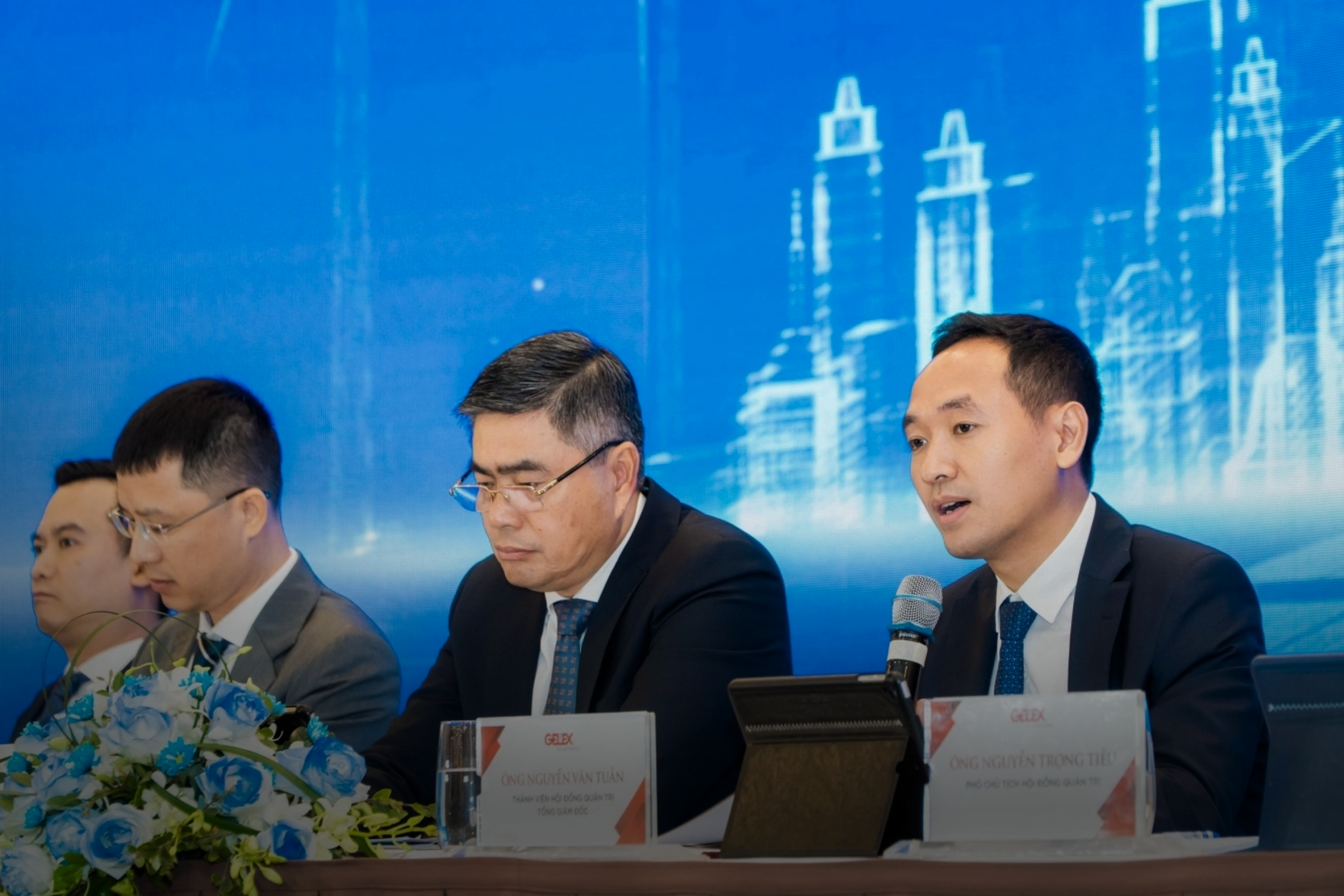
While the market was still trying to establish who had acquired control of the stake, Nguyen Van Tuan appeared, taking up the position of Chief Executive at the age of 31. By 2018, he had been elected Chairman of the Board, consolidating his position at the apex of the group's leadership structure. Below him sat a management system accustomed to state enterprise stability.
Reorganizing and running an institution of that provenance is not simple. Differences in management philosophy, decision-making culture and entrenched factional interests typically produce internal conflict and strategic inertia. This is a familiar obstacle across Vietnamese state divestments, where many incoming investors have spent years wrestling with legacy structures without producing meaningful change.
In GELEX's case, the transition was relatively frictionless. Tuan did not simply take control; he reorganized the apparatus — leaner, more focused, reducing the internal drag characteristic of state-lineage enterprises.
The nickname "Tuan Muot" dates from this period. It carries the implication that significant decisions, from short-term investments to long-term restructurings, were executed at speed without generating public conflict or internal crisis. In an emerging market defined by volatility, that smoothness became a competitive edge in itself. Veteran figures in Vietnamese finance describe Tuan Muot as a rare young talent capable of steering organizations that are, by nature, heavy with administrative culture and competing interests.
From Manufacturing to Holdings
The most consequential transformation was structural, not operational. GELEX pivoted to a holding model, reorganizing subsidiaries around two core pillars. The electrical equipment arm, Cadivi, Thibidi, HEM and peers, continued as the manufacturing cash engine, consolidated under GELEX Electric. Alongside it, an infrastructure platform began to take shape.
Between 2016 and 2019, the group entered energy through solar and wind projects under Vietnam's feed-in tariff regime. In 2018, GELEX took a controlling stake in Song Da Water Supply. In 2021, the acquisition of Viglacera marked the more decisive strategic inflection point.
Nominally, Viglacera is a construction materials company. Strategically, its value lay in its industrial land bank, assets directly correlated with FDI inflows and global supply chain relocation. The deal transformed GELEX from an electrical equipment manufacturer into a large-scale industrial property owner.
Post-consolidation, revenue and total assets rose sharply, as did financial leverage. Margins came under short-term pressure, but capital structure and resource allocation were recalibrated over the following years.
Expansion was accompanied by rationalization. Logistics is the clearest illustration: after acquiring Sotrans in 2017, GELEX found insufficient strategic fit and divested fully in 2020. In renewables, the group transferred the majority of its clean energy portfolio to Sembcorp between 2023 and 2024, booking approximately VND 1,000 billion in financial profit.
The result is a balance sheet that is leaner and more focused, with a clearer long-term orientation toward industry and infrastructure. Cash flows are managed centrally rather than dispersed across unrelated units. Each platform can raise capital independently, opening the path to IPOs or strategic partnerships.
The capital markets activity has followed. GELEX Electric (GEE) listed in 2022 and at points in 2025 approached a market capitalization of nearly $3 billion on the back of a sharp share price rally. In early 2026, GELEX Infrastructure (GEL) listed with a market capitalization of approximately $1.2 billion.
The Role of Capital Instruments
During the period of post-acquisition restructuring and consolidation of control, VIX Securities frequently appeared as an active proprietary investor within the GELEX ecosystem. Though not a formal investment bank and now legally separate from GELEX, VIX functioned as a tactical IB layer: absorbing large share positions, supporting liquidity, and maintaining market cadence so that strategic moves could proceed without friction.
This distinguishes GELEX from a number of Vietnamese financial ecosystems that aggressively expanded their IB and bond businesses between 2019 and 2022, then faced severe pressure when market conditions reversed. GELEX used capital markets as a tool in service of asset architecture, rather than making capital itself the engine of growth.
This reflects the personal background of Nguyen Van Tuan, who began his career in brokerage and securities management during the early years of Vietnam's capital markets. He understands cash flows and market psychology, and deploys financial instruments as strategic leverage rather than as products.
If VIX was the fighter jet, manoeuverable, fast, suited to tactical positioning, then Eximbank resembles an aircraft carrier: providing the longer runway and fuel supply of long-duration credit, and the perspective of the full credit cycle that allows the group to operate with greater structural stability.

The Logic of an Investment Conglomerate
GELEX represents a type of private conglomerate rarely seen in an economy as young as Vietnam's. It did not grow organically from a core sector and expand outward. It began by acquiring and reorganizing assets. Its starting point was investment and capital control, not manufacturing.
To understand where GELEX stands, it is useful to think of its development in two phases.
The first is accumulation: expanding scale, securing control of key enterprises, growing the balance sheet, using leverage to build the platform. This is the necessary precondition for constructing a genuine holding structure. The early histories of Korea's industrial-era chaebols, and of Indian conglomerates like Reliance and Tata before liberalization, followed the same logic, accumulate first, optimize later.
The second phase is capital management and allocation on the basis of those assets: separating platforms, improving cash flow transparency, divesting non-core positions, improving capital efficiency, and rebalancing the portfolio through the cycle.
GELEX has largely completed the accumulation phase. The balance sheet is large. Assets are concentrated in electrical equipment, water and industrial zones. Financial leverage is significant. Shareholder power is highly centralized, Nguyen Van Tuan holds approximately 24% of the capital; related legal entities and individuals have at points pushed the aggregate affiliated shareholder figure above 40%. That concentration of control enabled restructuring that was fast and relatively undisruptive.
The group is now at an inflection point, transitioning from an asset-expanding enterprise to a holding company that manages and governs capital on an established asset base.
The Questions That Remain
GELEX's stated targets for 2030 — a group market capitalization of approximately $5 billion and consolidated profit of around $250 million are ambitious, but still reflect the underlying pressures of leverage and thin margins.
Growth pathways are available: expanding manufacturing and industrial zones; benefiting from rising industrial land values as supply chains relocate; realizing asset gains through well-timed divestments; or deploying additional leverage to amplify scale. Each, however, carries its own costs. Manufacturing requires sustained operational capability. Industrial zones depend on FDI flows and global investment cycles. Asset rotation demands pricing discipline. And leverage amplifies profits on the way up, but when the interest rate cycle turns, the buffer erodes quickly and visibly.
The market, accordingly, will look beyond the headline targets. The questions that serious observers are asking are structural: Will growth continue to be driven by operating cash flow and genuine value creation, or primarily by mechanical balance sheet expansion? How much of GELEX's competitive advantage derives from operational excellence, and how much from the ability to read, or anticipate, policy?
And, most critically, there is the question of structural risk: a heavily leveraged asset base in a capital market that lacks depth. Can GELEX evolve into a system of enterprises capable of generating durable, sustainable profits even when credit tightens?
The historical record of Asian conglomerates is instructive. The asset accumulation phase typically proceeds smoothly when credit is abundant and policy is supportive, and proves fragile when conditions reverse. Korea's pre-1997 chaebols, China's HNA and Evergrande all absorbed that lesson at considerable cost. Conversely, the groups that genuinely graduated to the next level, Reliance in India, CK Hutchison in Hong Kong, did so by surviving the credit squeeze through capital discipline and proactive restructuring.
There is, too, a governance dimension. Asset accumulation phases tend to coexist with concentrated power. But the transition to maturity typically demands clearer delegation of authority and stronger internal control mechanisms. A mature holding company requires a management apparatus capable of operating stably and systematically, standardizing governance behind the scenes. This will be the quiet but consequential test for GELEX in the period ahead.
Vietnam Vanguard
3rd March 2026